The Retention Struggle in Algebra
If you’ve ever taught Algebra, you’ve likely seen it: students who aced a topic two weeks ago suddenly stare blankly when it’s mentioned again. The problem isn’t that they never understood it—it’s that they didn’t retain it. And that retention gap is one of the biggest challenges I face as an Algebra teacher.

Why is Retention so Difficult in Algebra?
Algebra is cumulative. Each new concept builds on previous ones, so gaps in memory quickly become roadblocks to understanding. If a student forgets how to solve equations, then graphing linear functions becomes difficult. If they forget how to factor, then solving quadratics becomes a nightmare. I have found that my students learn things in isolation, but have trouble applying it to future topics and concepts. We also “accelerate all” in my district (read my first blog post here) so our curriculum doesn’t always follow a natural progression and flow. This is because we have to fill gaps with information that they did not learn in seventh grade. Since there is not an honors program we are essentially teaching 8th and 9th grade math in one year.
A few common reasons students struggle to retain Algebra content include:
Cognitive Overload – Too many new ideas introduced at once with little time to reinforce old ones.
Cram-and-Forget Learning – Students often study just long enough to pass a quiz or test, then promptly forget what they’ve learned.
Lack of Regular Review – Without consistent revisiting of past material, even strong students begin to lose their grasp on key concepts.
Spiraled Daily Warm-Ups
Spiraled review is the practice of regularly revisiting past concepts in a structured, ongoing way. When applied to daily warm-ups, it becomes a powerful tool for reinforcing understanding and improving long-term retention.
Spiraled warm-ups begin each class with a short, low-stakes review of previously learned material. Over time, this repetition strengthens memory, reduces anxiety, and builds a more solid foundation for learning new concepts.


Benefits of Spiraled Warm-Ups in Algebra
1. Built-in Review Without Losing Instructional Time
Warm-ups typically take 5–10 minutes at the start of class—time that’s often underutilized. With spiraled content, those minutes become meaningful opportunities to reinforce critical skills.
2. Early Identification of Gaps
Regular exposure to old content helps teachers identify areas where students are struggling before those gaps grow into larger issues.
3. Increased Student Confidence
When students see familiar problems on warm-ups, they experience a sense of accomplishment. That confidence can carry into the new lesson and create a more positive classroom environment.
4. Better Test Preparation Without “Test Prep”
By continuously reviewing past content, students are more prepared for cumulative assessments. This helps eliminate the need for stressful review sessions right before an exam.
How I format my spiraled warm-ups
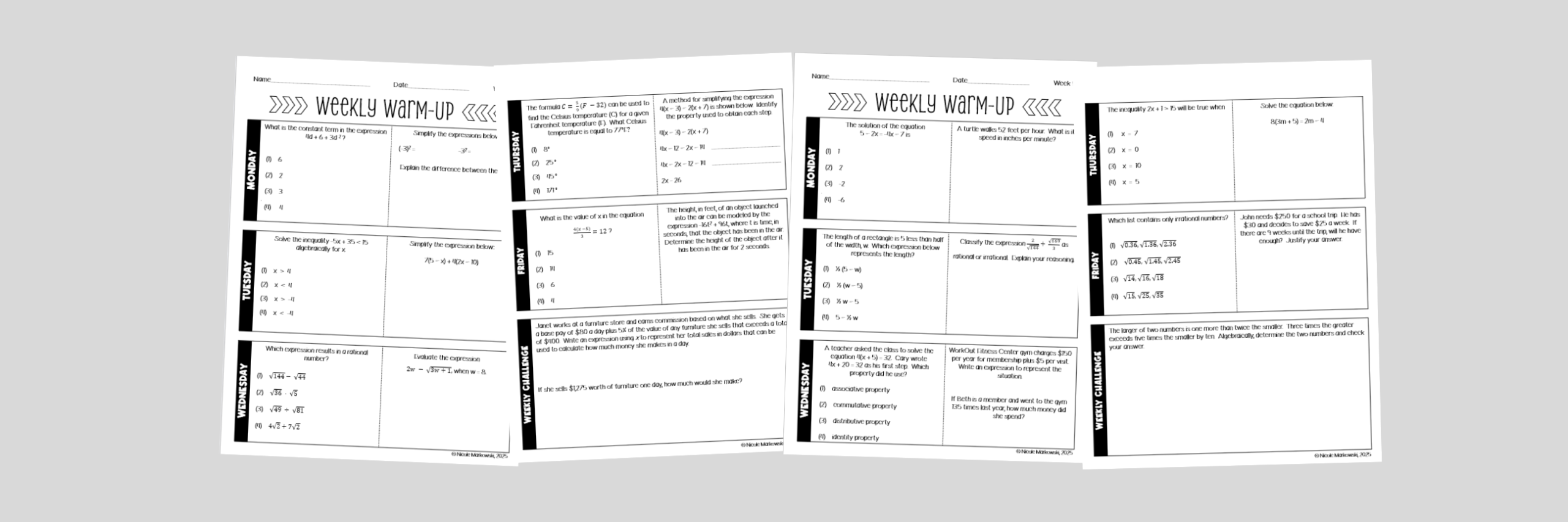
So far I have created spiraled daily warm-ups for the first semester of Algebra 1. I am working on finishing the second semester by the end of September. I kept the daily spiraled warm-ups short yet effective by including just two questions per day. One is multiple-choice and the other is a short answer question. The short answer questions include word problems, solving equations, graphing, error analysis, explaining concepts, etc. Each question is spiraled and aligned with the Next Generation Learning Standards. This helps students build long-term retention and prepare for end of year testing requirements. In my case, this is the NYS Regents exam.
To add extra engagement, I also included a weekly challenge problem on the sheet each week for early finishers who want to push their thinking further. In my classroom, what I will do for students who solve it correctly, is reward them with a sticker. In their binders students keep a sticker sheet and once they collect ten stickers, they receive a reward—this small incentive keeps motivation high.
Every three weeks, I have also included a spiraled quiz to check in on progress and reinforce previously learned skills. My Semester 1 Algebra 1 Spiraled Warm-Ups include 18 weeks of daily warm-ups along with six spiraled quizzes, giving students consistent, structured practice all year long.

Final Thoughts
In a subject as layered and interconnected as Algebra, retention isn’t a luxury—it’s a necessity. Spiraled daily warm-ups are a simple, effective way to reinforce learning consistently, helping students build—and keep—the skills they need for success.
If you’re looking to increase student mastery without overhauling your curriculum, check out my Algebra 1 Spiraled Daily Warm-Ups.

Comments are closed